Skip to content
If you are looking for the Right concrete flatwork contractors in Big Timber, Montana you need to do your research.
Homeowners in Big Timber know that a good concrete slab is more than a gray square it is the foundation for your garage the path to your front door and the patio where you watch summer storms roll across the Crazy Mountains.
With winter lows that dip to 22°F and freeze-thaw cycles that punish anything built poorly concrete flatwork in Big Timber has to be done the first time.
We have been pouring concrete across Sweet Grass County for years.
We have seen what works in this climate what fails and what questions homeowners should ask before they sign a contract.
This guide covers everything you need to know about flatwork in Big Timber from material choices to realistic costs and how to spot a contractor who understands local conditions.
What is flatwork and why do homeowners in Big Timber choose it?
Concrete flatwork refers to any concrete surface poured on site, such as driveways, sidewalks, patios, garage floors and basement slabs.
Unlike -cast panels concrete flatwork is formed, poured and finished in place which means the crew controls every step from subgrade to final seal.
Homeowners in Big Timber choose concrete for three reasons.
First it handles the temperature swings.
Our continental climate sees 86°F summers and sub-zero winters.Trusted concrete flatwork contractors in Big Timber, Montana
Concrete does not warp, rot or burn.
Second it fits the aesthetic.
A stamped patio that mimics sandstone or a stained walkway in earth tones blends with the Montana landscape better than pavers or asphalt.
Third it adds value.
A finished driveway or patio improves curb appeal and gives buyers confidence that the property was maintained properly.
The Portland Cement Association notes that concrete structures offer durability and can withstand natural disasters minimizing repair costs and environmental impact over decades.
That longevity matters in a place where replacing a failed slab means fighting ground and short construction seasons.
There are types of concrete flatwork including exposed aggregate stamped concrete and standard concrete.
Each type has its advantages and disadvantages.
Exposed aggregate reveals the stone within the mix giving a natural look.
It drains well. Hides minor imperfections.
It costs more than concrete but the visual upgrade is significant for front walkways.
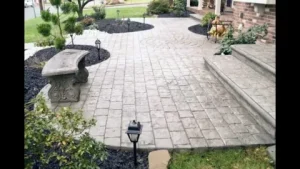
Stamped concrete uses mats to imprint patterns, such as slate, cobblestone or wood plank while the concrete is still plastic.
Color hardeners and release agents create depth.
In 2026 basic stamped work runs $12–$14 per foot while multi-pattern designs with borders reach $18–$20 per square foot.Top concrete flatwork contractors in Big Timber, Montana
The key risk in our climate is surface scaling from freeze-thaw if the sealer wears off.
A contractor who understands Big Timber winters will specify a high-solids sealer and a reseal schedule.
A licensed contractor in Big Timber told us that the common mistake he sees is homeowners choosing stamped concrete for a driveway then skipping the reseal cycle.
Within five years the pattern. Surface scaling begins.
He recommends stamped concrete for patios and walkways where foot traffic’s lighter and maintenance is easier to manage.
The concrete flatwork process involves steps, including site preparation and grading, subbase installation, forming, reinforcement placement pouring and finishing curing and sealing and joint cutting.
Understanding what a contractor actually does helps you evaluate bids and spot shortcuts.
Site preparation and grading is the step.
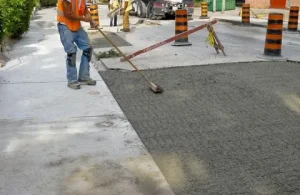
The crew removes topsoil, vegetation and any old concrete.
They grade the subgrade to slope water away from structures.
In Big Timber, where the growing season runs from mid-May to September this step usually happens in late spring or summer.
Poor grading causes pooling, which accelerates freeze-thaw damage.Professional concrete flatwork contractors in Big Timber, Montana
Subbase installation is the step.
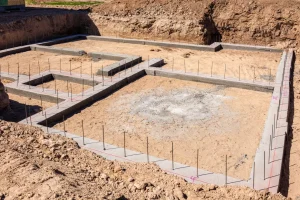
A 4- to 6-inch layer of compacted gravel or crushed stone provides drainage. Prevents settling.
The Montana Residential Code requires subbase preparation for frost protection though exact depth depends on soil conditions.
Sweet Grass County soils vary from loam to clay-heavy mixes; a contractor should test or at least observe the subgrade before quoting.
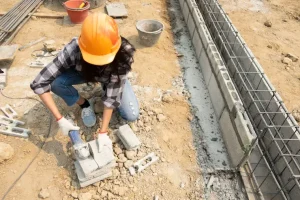
Forming is the step where wooden or metal forms define the slabs shape and hold the concrete during the pour.
Forms must be level, square and braced to withstand the pressure of concrete.
Reinforcement placement is the step where wire mesh or rebar grids sit in the middle of the slab thickness.
For driveways and garage floors that see vehicle loads rebar is the choice.
Wire mesh works for light-use patios and sidewalks.
Fiber reinforcement added to the mix helps control shrinkage cracks during curing.
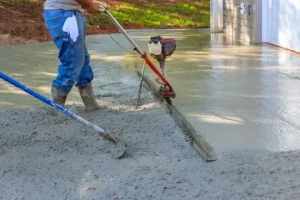
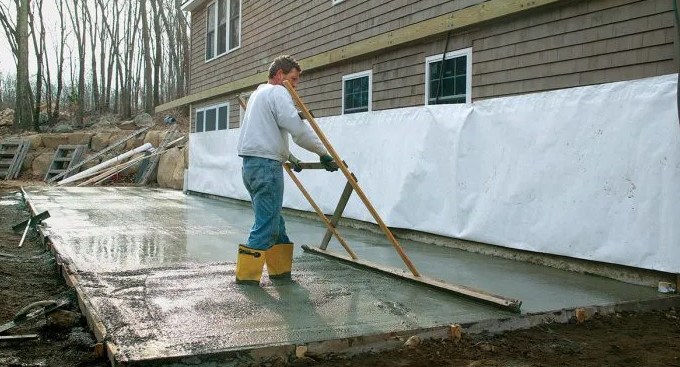
Pouring and finishing is the step where ready-mix concrete arrives by truck.
The crew spreads it with screeds, bull floats and hand tools.
For flatwork a broom finish follows.
For work stamping or staining happens within a narrow window—usually two to four hours after the pour depending on temperature and wind.
Curing is the step where concrete reaches design strength over 28 days. The first 48 hours are critical.
In Big Timbers windy climate crews often spray curing compounds or cover slabs with wet burlap and plastic to slow moisture loss.
Rapid drying causes surface cracks. Weakens the finish.
Sealing and joint cutting is the step.
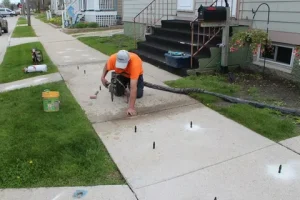
Control joints are. Tooled into the slab to manage cracking.
A penetrating or film-forming sealer is applied after the slab cures.
Sealers block. De-icing salt from entering the pores.
The cost of flatwork in Big Timber varies depending on several factors, including concrete mix design, reinforcement, finish type and site accessibility.
In 2026 standard residential concrete flatwork in Montana costs between $5.80 and $6.40 per foot installed.
Decorative options push that range
Concrete mix design is a factor in determining the cost of concrete flatwork.
Standard residential slabs use 3,000 PSI concrete.
Driveways and garage floors benefit from 3,500–4,000 PSI.
Each 500 PSI increase adds $5–$10 per cubic yard.
Air-entrainment—tiny bubbles added to the mix—is non-negotiable in Big Timber.
It gives water room to expand when it freezes protecting the slab from pressure that causes cracking and scaling.
Reinforcement is another factor in determining the cost of concrete flatwork.
Wire mesh costs $0.15–$0.25 per foot.
Rebar grids run $0.50–$1.00 per foot for materials.
Post-tensioning is rarely needed here unless soil conditions are unusually poor.
Finish type is also a factor in determining the cost of concrete flatwork.
Broom and smooth trowel finishes are usually included in base pricing.
Stamped concrete adds $5–$10 per foot.Affordable concrete flatwork contractors in Big Timber, Montana
Staining adds $4–$8 per foot.
Exposed aggregate adds $3–$6 per foot.
Site accessibility is another factor that can affect the cost of flatwork.
If the concrete truck can back directly to the forms labor stays efficient.
Tight side yards, slopes or long distances from the road require wheelbarrows, pump trucks or power buggies.
That adds hours and cost.
Seasonal timing is also a factor that can affect the cost of flatwork.
Contractors in Big Timber work from May through October.
Booking in spring or late fall can sometimes save money but pouring when overnight lows drop below 40°F requires cold-weather protection—blankets, heaters or accelerators—which adds cost.
Permits and inspections are also a factor that can affect the cost of flatwork.
The City of Big Timber requires building permits for new concrete work attached to a residence or exceeding 200 square feet for detached accessory structures.
Sweet Grass County has its subdivision and building regulations for rural properties.
Permit fees vary by project scope.
A contractor should handle this. Confirm it is included in the bid.
To choose the concrete flatwork contractor in Big Timber you need to do your research.
Ask about experience.
A contractor who works exclusively on flatwork in Big Timber will have handled the local permit process know which ready-mix suppliers deliver consistent air-entrainment and understand how wind and low humidity affect curing times.
Request a written scope of work.
A bid specifies square footage, thickness, PSI, reinforcement type, base preparation depth, finish type, who pulls the permit curing method, control joint spacing and warranty terms.
If a bid is a total number ask for line items.
A contractor who cannot provide them is not organized enough to manage your project.
Verify. Past work.
Drive by completed jobs from two or three years ago.
Look for pattern retention on work even coloring on stained slabs and crack control at joints.
Winter in Big Timber reveals flaws that summer hides.
Compare three quotes.
Prices for specs can vary 20–30% between contractors.
The lowest bid is not always the value.
If one quote is below $5.50 per square foot for standard work someone is cutting corners on base prep, reinforcement or concrete quality.
A contractor who works exclusively on flatwork in Big Timber—like Artistic Decorative Concrete—will have handled the local permit process, know which materials hold up in freeze-thaw conditions and carry the trade-specific insurance that general handymen often skip.
That specialization matters when your patio has to survive a March blizzard.
FAQS
How much does a basic concrete driveway cost in Big Timber?
A standard 4-inch broom-finish driveway runs $5.80–$6.40 per foot.
A typical two-car driveway of 500 feet costs roughly $3,000–$3,500.
Stamped or stained finishes push that to $6,000–$10,000.
What is the best time of year to pour concrete in Big Timber?
Late May through September is ideal.
Daytime highs are warm enough for curing and overnight lows rarely threaten freezing.
Pouring outside this window requires cold-weather protection, which adds cost and risk.
Do I need a permit for a patio in Big Timber?
The City of Big Timber requires building permits for new concrete work attached to a residence or exceeding 200 square feet for detached accessory structures.
Sweet Grass County has its subdivision and building regulations, for rural properties.
Permit fees vary by project scope.
A contractor should handle this. Confirm it is included in the bid.
Yes, if the patio is attached to your home or is bigger than 200 feet for detached structures. The contractor usually handles permitting. You should confirm that it is included in the bid. Inspections typically cover the base, reinforcement and final finish.
How long does concrete last in Montana’s climate?
It can last for 25 to 30 years if it is installed and maintained correctly. The key to making it last is using the mix of concrete preparing the base properly and sealing it regularly. If you do not reseal the concrete it can cut the lifespan in half.
Can stamped concrete handle Big Timber winters?
Yes it can handle Timber winters if it is installed and maintained correctly. The concrete needs to have air bubbles in the mix, a good sealer. It needs to be resealed every 2 to 3 years. You should not use chemicals to melt ice because they can damage the surface. Instead use sand or magnesium chloride.
How thick should a garage floor be in Big Timber?
It should be 5 to 6 inches thick with steel bars. Garage floors have to support the weight of cars and tools. They have to withstand temperature changes. If the floor is too thin it can crack. A group that knows about concrete says that floors that will have things on them should be thicker.
Why does my concrete contractor need to know about the soil?
The soil in Sweet Grass County is different in areas. Some soil has a lot of clay. Can expand and contract when it gets wet which can make the concrete move. Other soil drains well. May need to be compacted. If a contractor does not ask about or test the soil they are just guessing.
How can I prevent my concrete from cracking?
You cannot stop all cracks. You can control them. If the concrete has the spacing it can crack in a clean way. Using the amount of water and cement and letting it dry slowly can also reduce cracking.
What is air-entrainment. Why is it important?
Air-entrainment is when you add bubbles to the concrete mix. When water freezes it expands into these bubbles of damaging the concrete. In Big Timber, where the temperature goes below freezing times a year air-entrainment is very important. It is even required by law for concrete.
How long before I can drive on my concrete driveway?
You can drive on it after 7 days. It will not be fully strong until 28 days. You should not drive trucks or equipment on it for the full 28 days.
Should I seal my concrete. How often?
Yes you should seal your concrete. Sealers stop water, salt and stains from getting in. You should seal concrete every 2 to 3 years. If you have concrete you should seal it every 2 years to protect the color and pattern. You should use a sealer that is made for concrete that will be exposed to freezing temperatures.
What is the difference between wire mesh and rebar?
Wire mesh is a grid of steel wires that is put in the concrete. It helps control cracks. It does not add much strength. Rebar is steel bars in a grid pattern. It provides strength for driveways, garage floors and any concrete that will have heavy things on it. For concrete that will be used a lot rebar is worth the cost.
Conclusion
Now you know what concrete costs in Big Timber, which types of finishes can survive the winters and what questions to ask before you hire someone. The next step is simple: get three written quotes from contractors who have worked in Big Timber for more, than a season.
If you want a team that knows about Big Timbers weather, soil and laws Artistic Decorative Concrete can give you a free assessment and explain your options without pushing you to make a decision.